
"Central American coffee"
6000 article(s) found

Central and South American Coffee Flavor washing Raw Coffee beans at La Tisa Manor in Guatemala
Coffee was really introduced into Guatemala in 1750 by Father Jesuit, where the coffee industry was developed by German colonists at the end of the 19th century. Today, most of the coffee industry's production takes place in the south of the country. There are seven main coffee producing areas in Guatemala: Antigua, Coban, Atitlan and Huehuete.

Flavor Overall balanced, sour and bitter Central American Honduran coffee Introduction
Honduras is a mountainous country in Central and North America with a population of more than 8.3 million and an area of about 112,000 square kilometers. Located in northern Central America. It is bordered by the Caribbean Sea to the north, the Gulf of Fonseca in the Pacific Ocean to the south, Nicaragua and El Salvador to the east and south, and Guatemala to the west. More than three-quarters of the territory is mountainous and plateau. Mountains extend from west to east, inland for lava plateau, mountainous
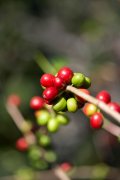
Costa Rican Diamond Hill Manor Central and South American Coffee
Costa Rica has a long history of cultivating coffee, but in the past 10 years, the new dry treatment method has become a trend, collectively known as the new method of honey treatment, which uses the scraper to adjust the scraping degree of the pulp. Output with the color from light to deep (white, yellow-red-white, yellow-red-black) and show a sense of honey from light to strong, acidity, complex aroma thick feeling has its own depth, each has its own advantages. Diamond Hill

Introduction to the origin of coffee beans in Tanzania Central American coffee producing countries
Europeans give Tanzania a nickname for coffee gentleman, and Chinese coffee connoisseurs call it the coffee swordsman with the coffee king Blue Mountain and the coffee lady's mocha. Coffee is like the simple, frank and enthusiastic national character of Tanzania. Its refreshing acidity and medium mellowness complement sweet citrus and floral aromas. You can experience: the production phase of different nationalities

Colombian coffee bean species morphology Central and South American flavor
Species Morphology Colombian Coffee Plant Morphology Colombian coffee is mainly small grain coffee. Plants are small trees or large shrubs, 5-8 m tall, usually much branched at base; old branches gray-white, nodes dilated, young branches glabrous, compressed. Leaves thinly leathery, ovate-lanceolate or lanceolate, 6-14 cm long and 3.5-5 cm wide, tip long acuminate, acuminate 10-15 mm long, basal
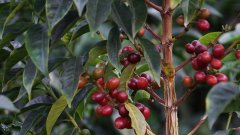
Brazilian coffee beans Central American coffee flavor
Coffee is made from fine coffee beans. If the beans used to make coffee are not specialty coffee beans, the resulting coffee cannot be called specialty coffee-one of the world's largest coffee producers and exporters that can be hailed as the coffee continent. Since there are about ten states in the vast territory that produce large quantities, Brazil has set its own grading standards to compensate for geographical differences and quality differences.
High-priced Central American coffee beans Jamaica Blue Mountain Coffee Flavor
. Jamaica, which is famous for its coffee, is the talk of Jamaica, a small republic in the Caribbean. The slopes of the mountains that run through the island are the main producers of Jamaican coffee. The most famous is the Blue Mountain Blue Mountain, located northeast of the capital Kingston. The beautiful Blue Mountain Lianfeng is an excellent place for coffee cultivation, named after the highest peak of 2256 meters.

Flavor description of mild Nicaraguan coffee varieties introduction to the taste of boutique coffee beans in the manor
The Nicaraguan national emblem was launched in 1971. The national emblem consists of three yellow edges symbolizing equality, truth and justice. The five green mountains symbolize Honduras, Guatemala, Nicaragua, El Salvador and Costa Rica, which used to make up the Central American Federation. Blue symbolizes the Pacific Ocean and the Caribbean Sea, which are separated by the Central American isthmus. The yellow on the top of the mountain reflects the volcanic plateau landform of the area. Erect above the green mountain

Salvadoran coffee Central and South American coffee beans
Boutique coffee is fresh coffee. Whether it's food or drink, of course, the fresh the better, and so is boutique coffee. High-quality coffee should keep the coffee beans fresh before making, including the preservation of baked beans, and grind the coffee beans into powder before making, which is also to retain its original and best flavor. And the way of making hand-made coffee is such a way to make high-quality coffee.

China Coffee Network American Coffee Bean El Salvador Manor Micro-batch Water washing Palamara SHB
El Salvador is located in Central America, bordered by Guatemala and Honduras in the north, and the Pacific coastline in the west and south. El Salvador is the smallest country in Central America and the most densely populated country in Central America. Although the territory of El Salvador is small, it has dozens of volcanoes. It is the country with the highest density of volcanoes in the world, so it is called the country of volcanoes. Full

The growing environment of Costa Rican coffee in the Central American isthmus
Costa Rican coffee is called extra hard beans, and this kind of coffee can grow at an altitude of more than 1500 meters. Altitude has always been a problem for coffee growers. The higher the altitude, the better the coffee beans, not only because the higher altitude can increase the acidity of the coffee beans and thus increase the flavor, but also because the lower night temperature at the higher altitude makes the trees grow slowly, thus from the coffee beans.
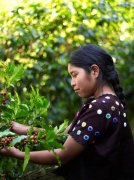
Guava Plain Manor, New Oriental region of Guatemala, Central and South American Coffee
Guatemala is one of the most important coffee producing countries in Central America, with long mountains and different regional climates, thus creating eight major coffee producing areas in Guatemala, all located on the highland topography of the subtropical climate, with abundant and stable rainfall and fertile volcanic ash soil is an excellent environment for coffee trees to grow. Plan del Guayabo is located next to the Volcn de Suchitn volcano.
Brazilian coffee Central and South American coffee beans Brazilian flavor
[introduction] Brazil has failed to increase production in recent years, but it has greatly improved the quality of coffee in the past decade, trying to get rid of the idea that Brazilian weight is not important to quality and that Brazilian beans are as light as water. In recent years, it has successfully transferred to the boutique coffee market.

A Brief Talk on Sino-American Coffee-Beautiful Nature, Caribbean Spirit-Dominican Republic
Professional barista exchanges, please pay attention to coffee workshop (Weixin Official Accounts cafe_style) rather than Dominican coffee belongs to Central American coffee, but many materials are classified as Caribbean or island coffee. In addition to differences in climate and terroir, there are also differences in political independence and consumption habits, which make multinational coffee more elegant temperament belonging to islands. In recent years, it has devoted itself to

Nicaraguan Coffee Los Congo Manor in Central America
Beautiful sour taste, moderate mellow Nicaraguan coffee belongs to the Central and South American style coffee, although the acidity is not very high, but it feels refreshing. The mellow degree is also not high, but the overall feeling is just right, neither thin nor too strong. To make it easier to accept. The taste of red wine can be vaguely felt in the shallow sour taste, which is also a major feature of Nicaraguan coffee.

Fragrant and mild taste of El Salvador Cuskabapa region boutique coffee beans taste manor
The national flag of El Salvador was launched in 1822, was rescinded in 1865, was restored in 1912, and was officially established as the national flag in the 1972 Constitution. The national flag is rectangular, with a ratio of length to width of 335 to 189. From top to bottom, the flag is connected by three parallel equal horizontal rectangles of blue, white and blue, and the central part of the white part is painted with the national emblem. Because El Salvador used to be a member of the Central American Federation, its flag is beautiful.

Introduction to the method of describing the characteristic Flavor of Coffee beans in Latin America
Characteristics of flavor description of coffee beans in Latin America Central and South America is the largest coffee producing area in the world, and there are numerous boutique coffees here. Take Colombia, Guatemala or Brazil as an example, good coffee is enough to make people dazzling. What is the resource advantage that makes Central and South America so good? French naval officer Gabriel Mat in 1721
Colombian coffee bean Colombian species morphology Central and South American coffee beans
Species morphology the main varieties of Colombian coffee are small grain coffee. Plants are small trees or large shrubs, 5-8 m tall, usually much branched at base; old branches gray-white, nodes dilated, young branches glabrous, compressed. Leaves thinly leathery, ovate-lanceolate or lanceolate, 6-14 cm long and 3.5-5 cm wide, tip long acuminate, acuminate part 10-15 mm long, base cuneate or slightly obtuse, rarely round

Will the coffee treated by honey and anaerobic treatment surpass the washing method in Central America?
For decades, classic washed or wet processed coffee from Central America and Mexico has become one of the most popular types of coffee in the world. Usually clean, usually sweet and sour, with a range of ever-changing fruit flavors always drupes, usually some oranges and flowers, nuts and caramel to rich dark chocolate, depending on coffee and roasting. Most likely, some fragrance.